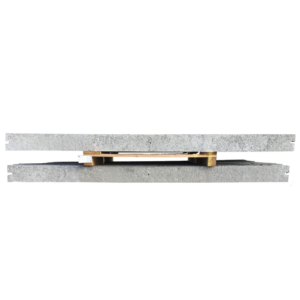
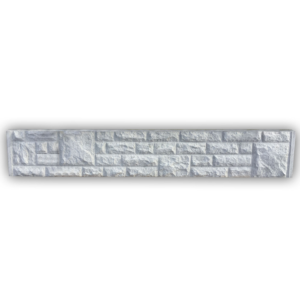
Protects timber
Separates fence panels and boards from damp soil and standing water.


Concrete fencing components
Strong, low-maintenance gravel boards designed to protect timber fencing
from damp ground while creating a neat and durable base.
Separates fence panels and boards from damp soil and standing water.
Concrete provides a strong, rot-resistant base for garden fencing.
Create a clean and consistent line beneath panels or closeboard fencing.
Buying information
A gravel board forms a protective barrier between timber fencing and
the ground. It helps prevent fence panels or feather edge boards from
remaining in direct contact with damp soil.
Gravel boards also provide a level base, protect the bottom of the
fence from minor knocks and create a more finished appearance.
Check the board’s dimensions and intended fencing system before
ordering, particularly when matching an existing installation.
Select a gravel board that matches the distance between the posts and
the width of the fencing being installed. The range includes boards for
standard panel bays and longer closeboard fencing sections.
Measure the actual post spacing and slot dimensions rather than relying
only on the stated fence-panel size.
A 1.8 m board and a 6 ft board are similar in length but are not always
identical. Even a small difference can affect how securely the board
fits between existing posts.
When replacing a board, measure the original component and the clear
space between the post slots before choosing a metric or imperial
option.
Most standard fencing bays require one gravel board at the base.
Divide the complete fence length by the width of each planned bay to
estimate the quantity required.
Include every section between end, corner and intermediate posts.
Allow for stepped sections and any additional boards required to deal
with changes in ground level.
The gravel board, fence panel and required ground clearance must all
fit within the usable height of the posts. Adding a gravel board raises
the position of the panel and increases the overall fence height.
Confirm that the posts are long enough for the planned above-ground
height while still allowing an appropriate amount to be secured below
ground.
Prepare a firm and level base before positioning the board. With
slotted concrete posts, the gravel board is normally lowered carefully
into the slots before the fence panel is added above it.
Concrete components are heavy and can cause injury or damage if
dropped. Use suitable lifting assistance, protective footwear and
gloves, and do not attempt an unsafe lift.
On sloping ground, fencing may need to be stepped in separate level
sections. Plan each post and board height before installation so that
the finished boundary follows the ground neatly.
Avoid leaving large unsupported gaps beneath the boards or forcing a
concrete board to follow an uneven surface.
Gravel boards can help contain small differences in finished ground
level, but ordinary fence components should not automatically be
treated as structural retaining walls.
Significant soil depth, sloping ground or poor drainage can place
substantial pressure on the fence. Seek appropriate professional
advice where a structure needs to retain soil.
Concrete gravel boards require relatively little maintenance. Keep
drainage routes clear and periodically check for movement, cracking or
damage caused by impact or ground settlement.
A damaged board should be replaced carefully with one of the correct
dimensions rather than being left to support the fencing incorrectly.
Based in Stanstead Abbotts, 414 Fencing supplies concrete gravel
boards, concrete posts and fencing materials throughout Harlow,
Hertford, Hertfordshire, Essex and North London.
Check your measurements before ordering and provide details of any
restricted delivery access.